Decks
Deck building and repair in Seattle
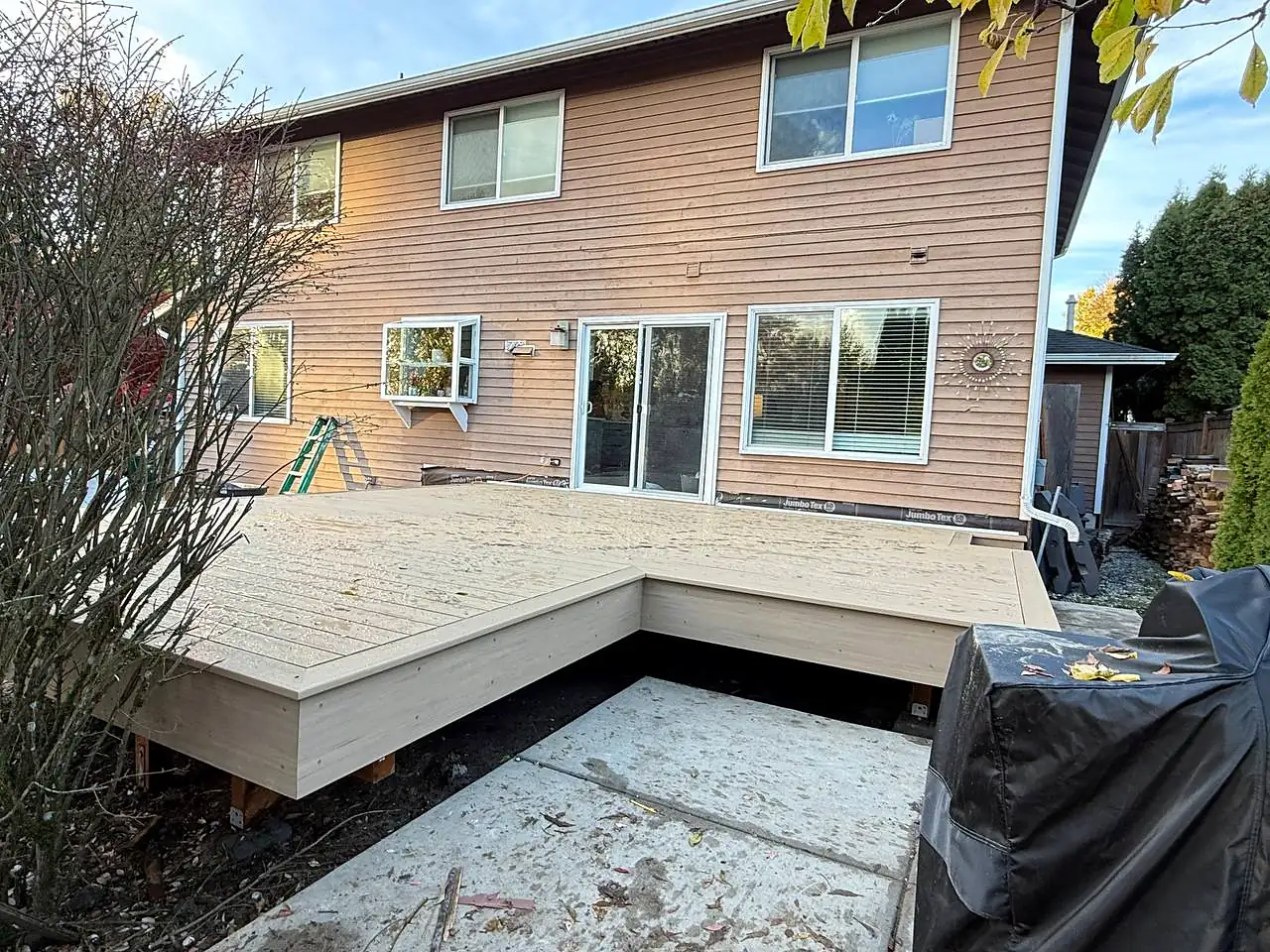
New decks, rebuilds and repairs for homes in Seattle and up to 50 miles around: footings, frame, boards, railing and stairs, built to your city’s code.
-
A typical build
1 to 3 weeks
On site, after the permit where one is needed.
-
How long it lasts
15 to 50 years
By the boards: each one below says.
-
Our warranty
[YEARS]
On the work; composite and PVC boards carry the maker’s too.
-
Your quote
A drawing and a price
The size, the boards, the railing and the stairs, in writing.
A deck project
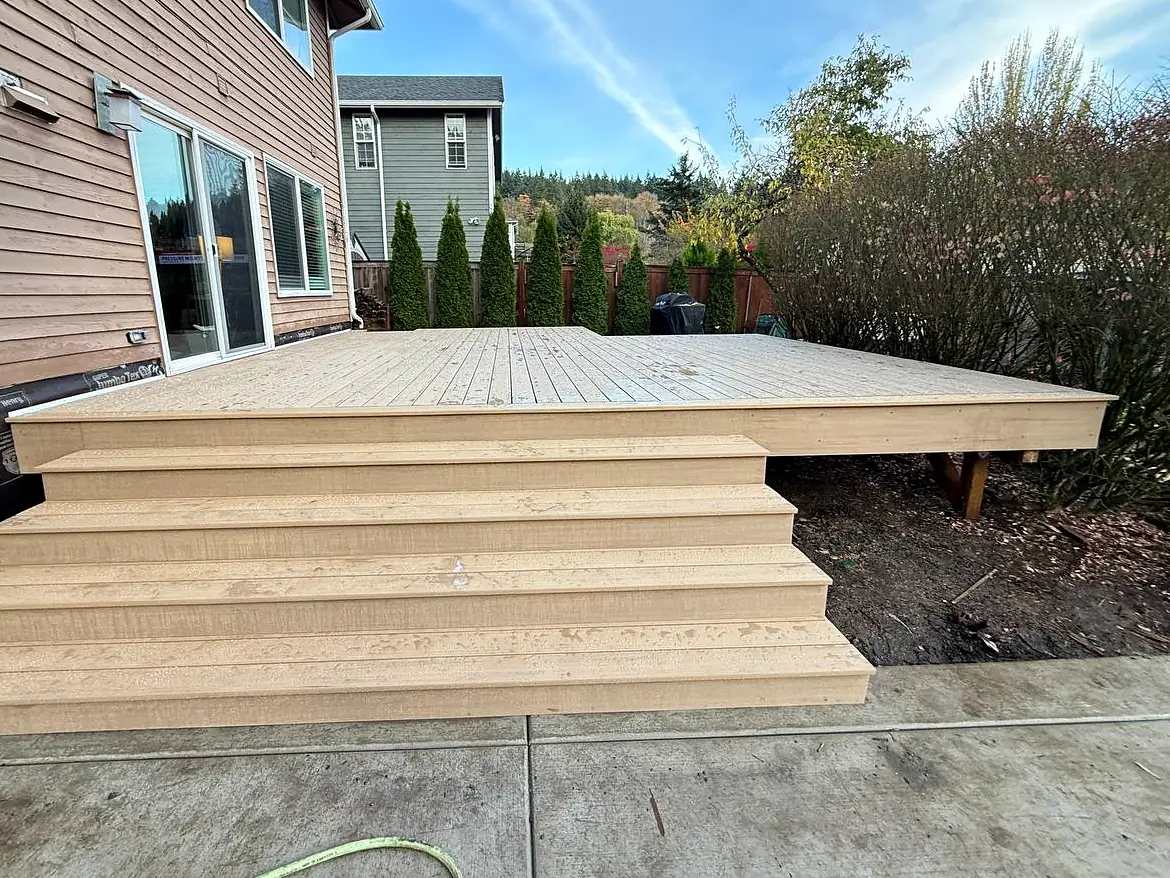
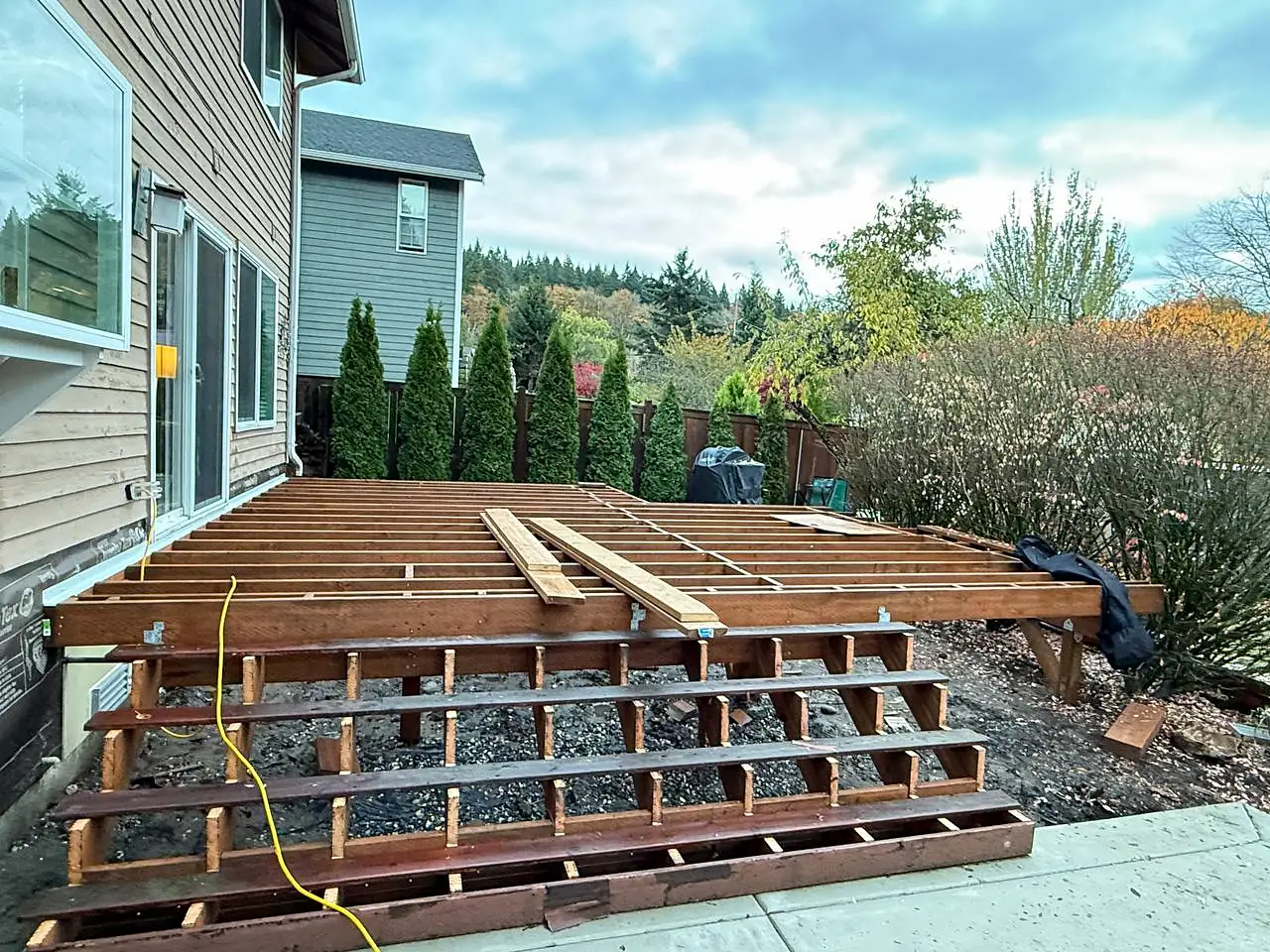
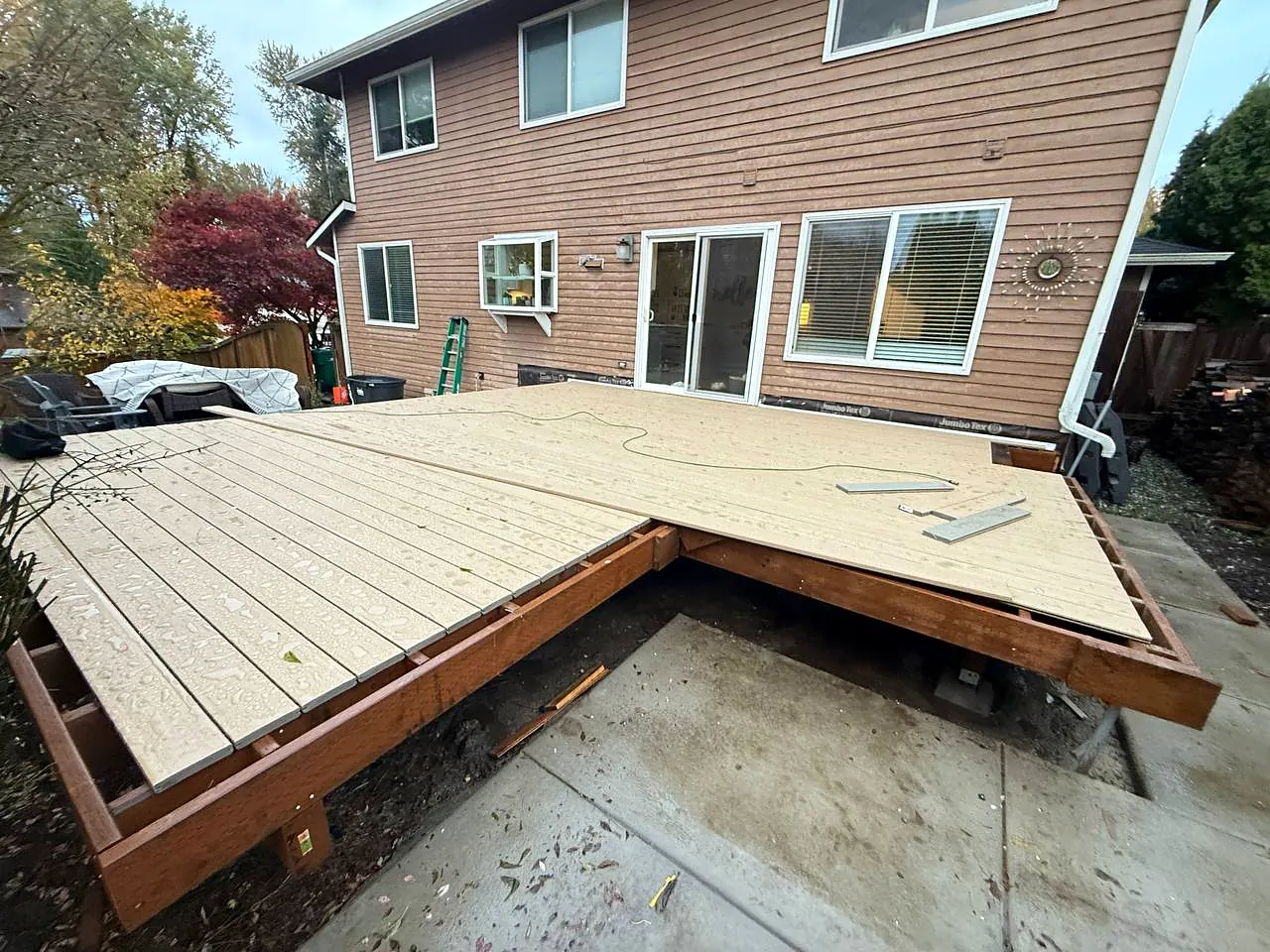
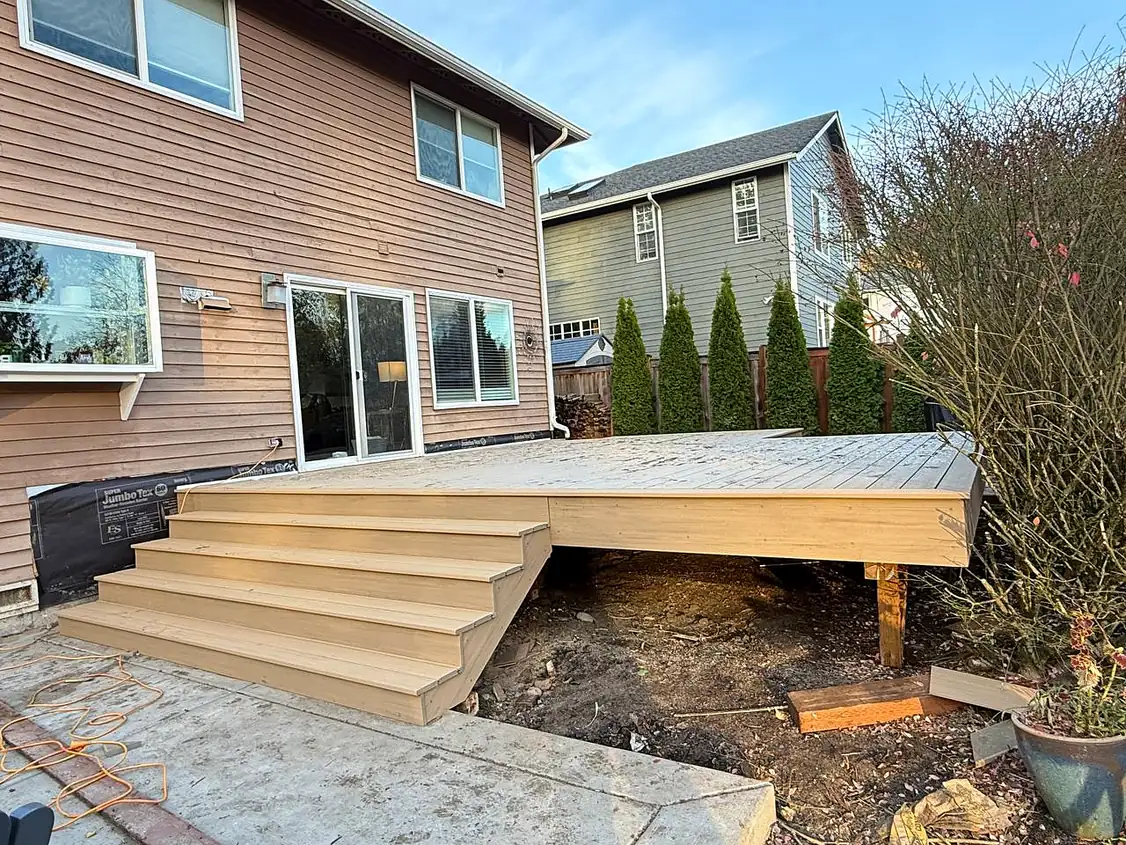
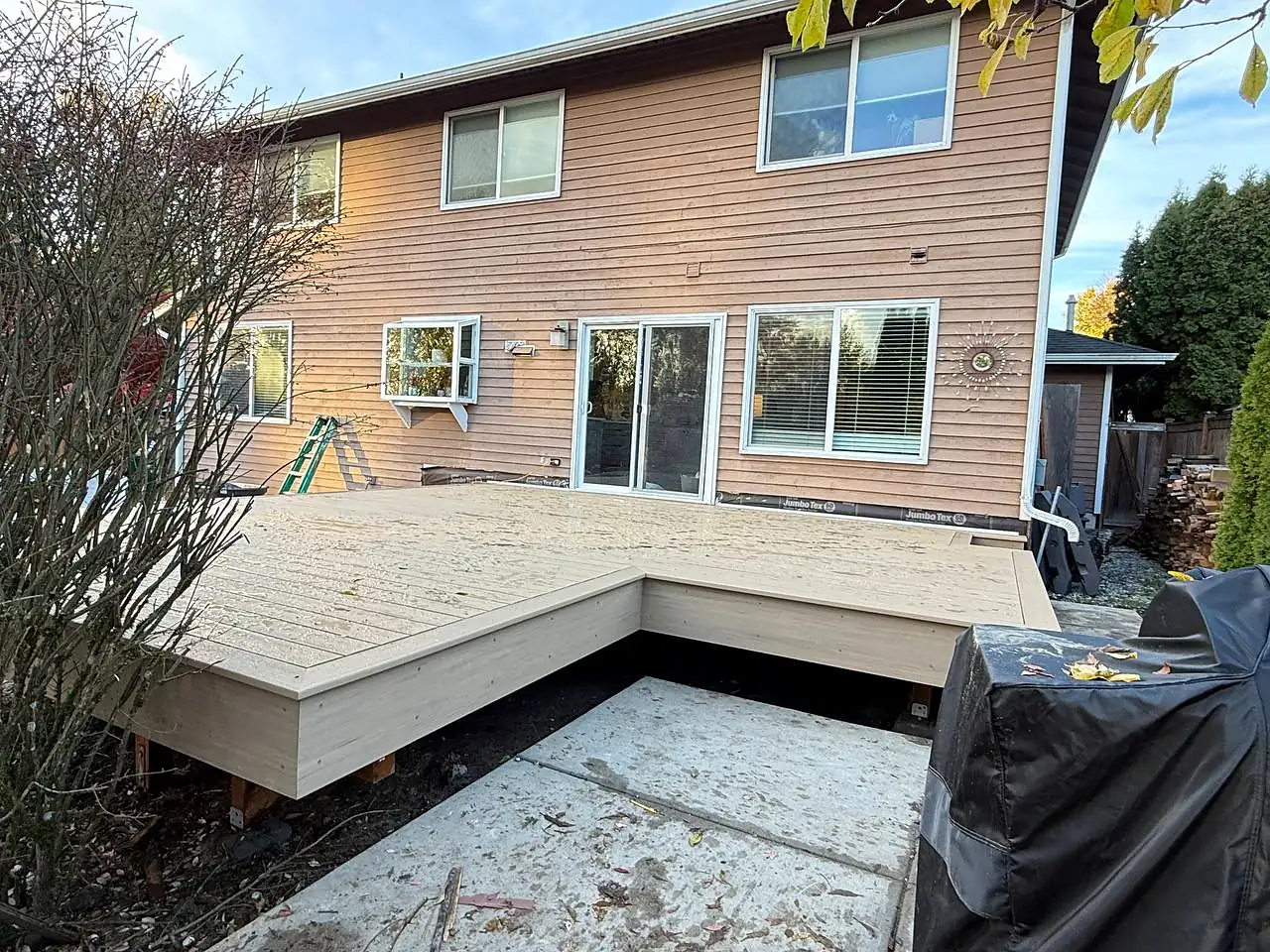
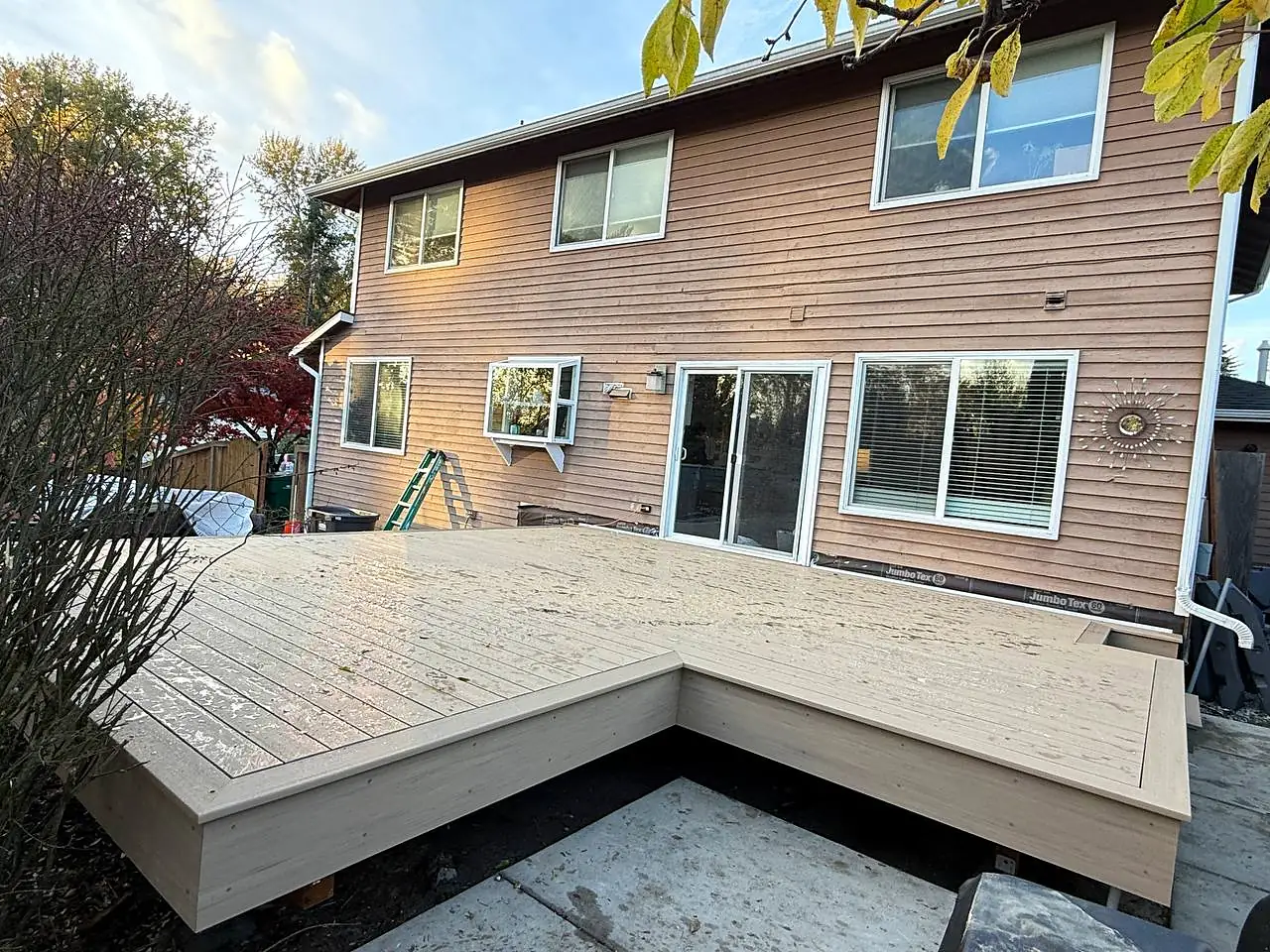
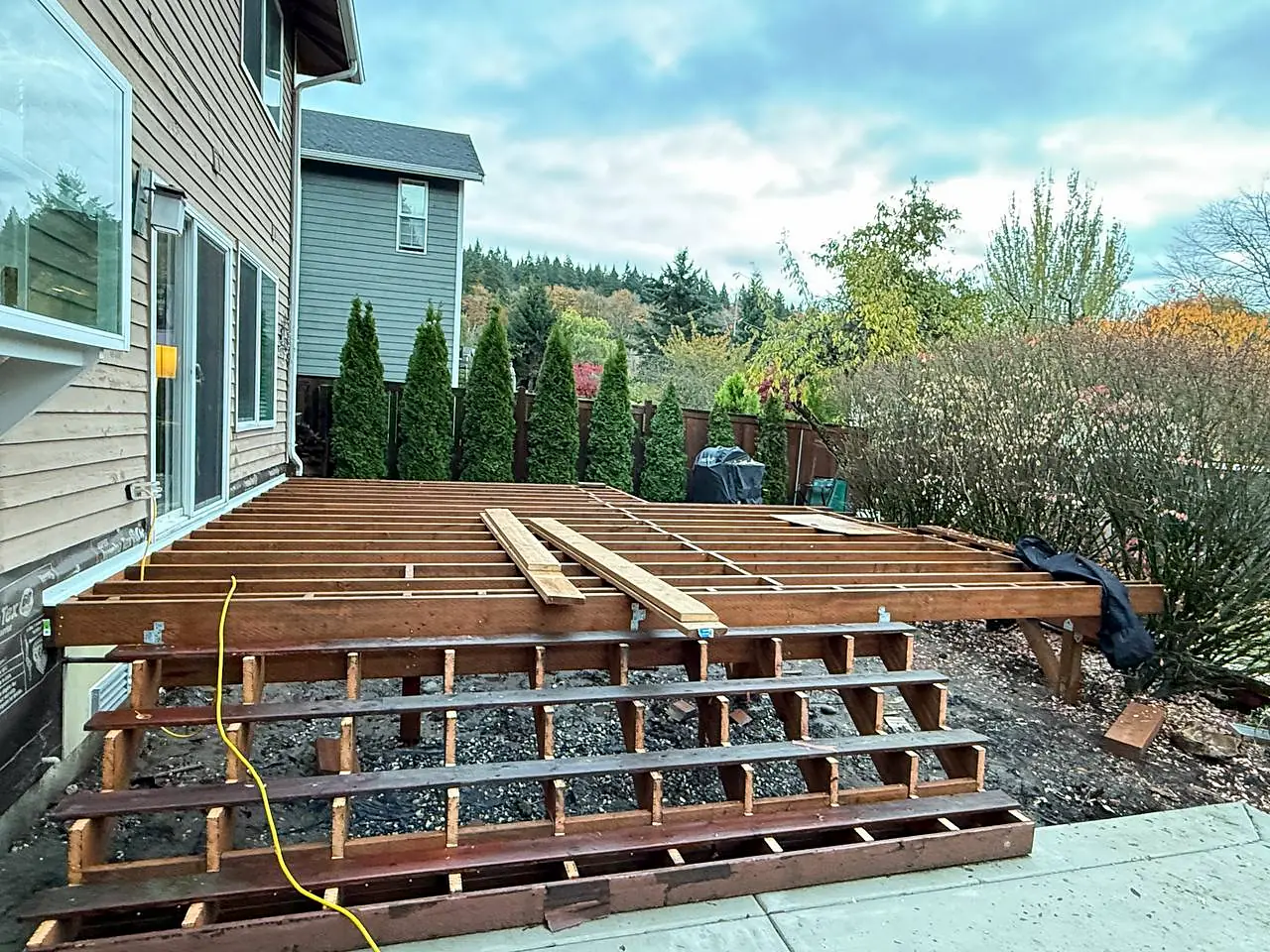
A new deck with wide stairs
From the frame on its footings to the last stair. Open it to see every step.
-
Decks
A new deck with wide stairs
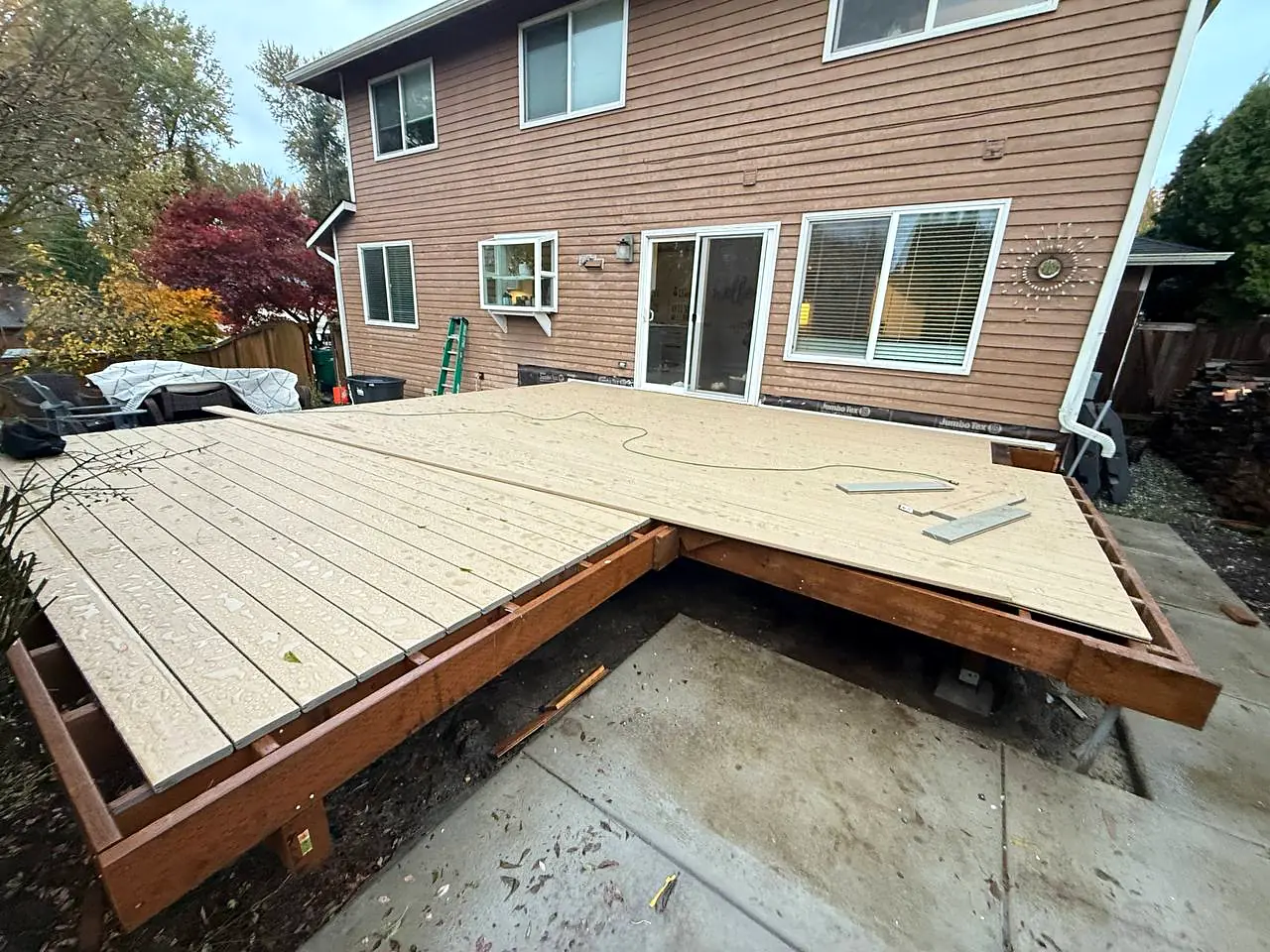
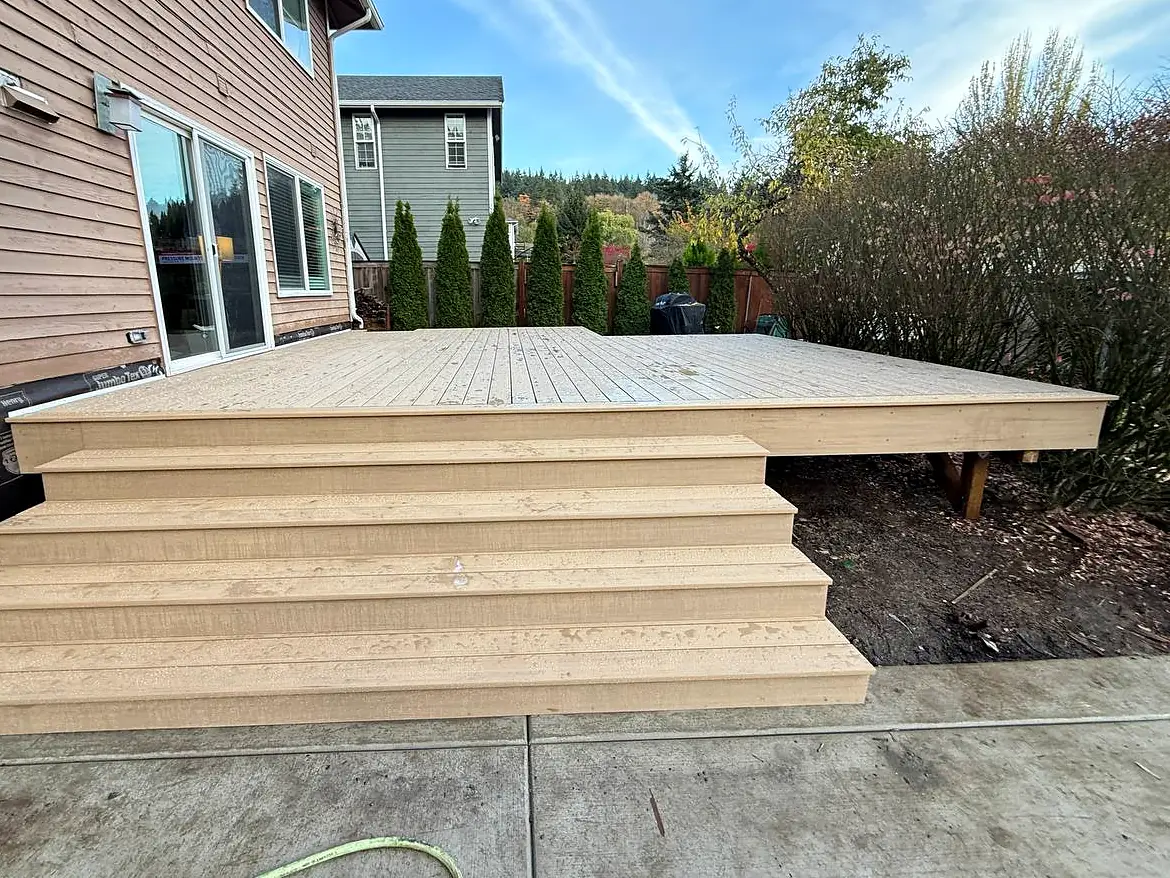
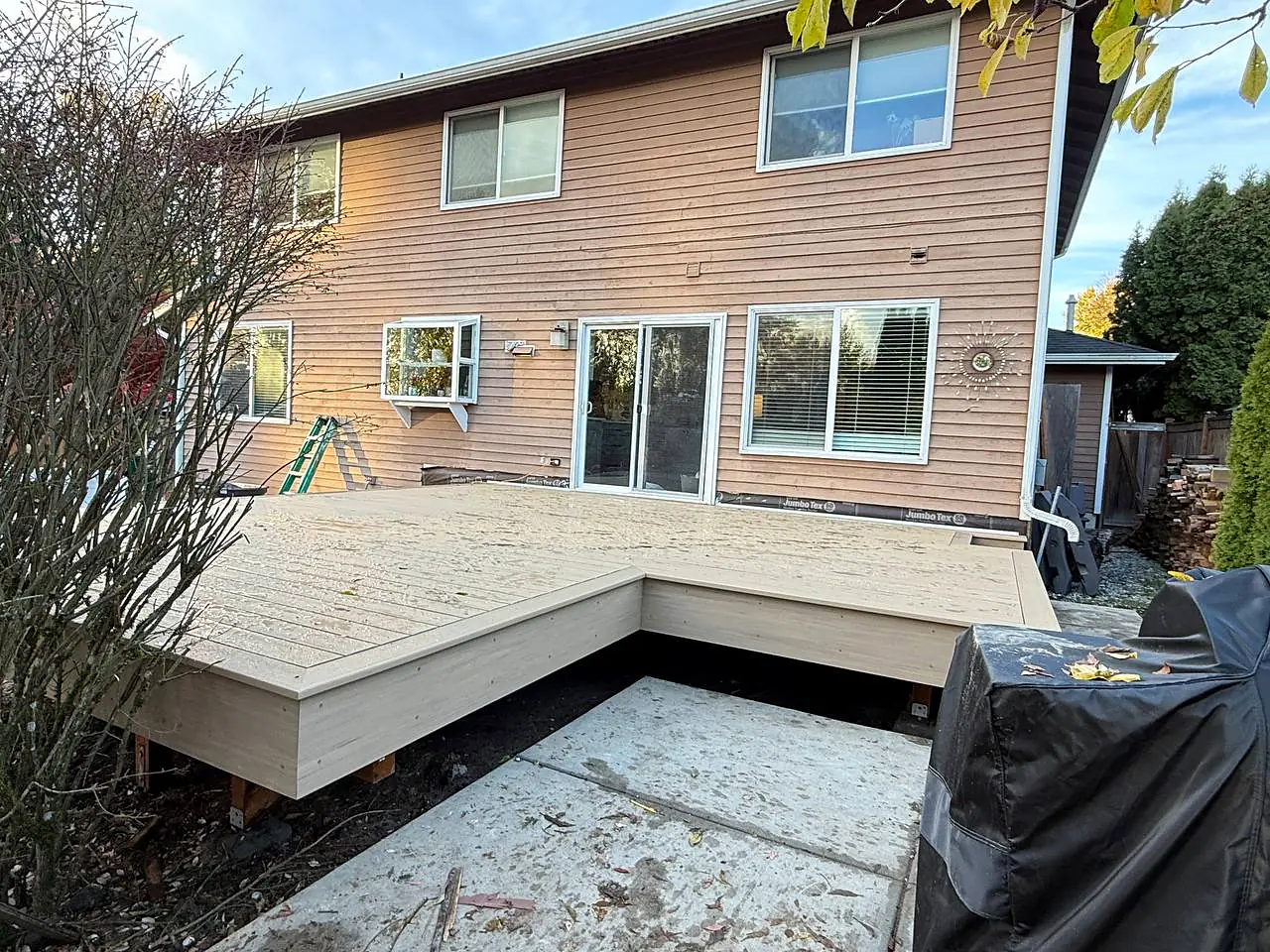
A composite deck on a new frame, then wide stairs down to the patio.
6 photos
Boards
Four kinds of deck boards
The frame under almost every deck is pressure-treated lumber. The boards on top are the choice: price now against upkeep later.
-
Lowest cost
Pressure-treated
Pine or fir treated against rot, the usual wood for the frame under any deck.
Lasts
15 to 25 years, with care
Good
- The lowest price
- Strong and easy to repair
- Takes a stain of any color
Watch for
- Checks, splits and warps as it weathers
- Cleaned and sealed every 2 to 3 years
- Splinters when left bare
-
Natural wood
Cedar
Western red cedar boards: light, straight and fragrant.
Lasts
15 to 25 years, with care
Good
- A beautiful natural color and grain
- Resists rot and insects by nature
- Stays cooler under bare feet than plastic boards
Watch for
- Soft: it dents and scratches
- Stained or sealed every 2 to 3 years, or it turns gray
- Costs more than pressure-treated
-
Low upkeep
Composite
Wood fiber and plastic with a hard outer shell. Trex and TimberTech are the best known.
Lasts
25 to 50 years
Good
- No staining or sealing: wash it twice a year
- No splinters and no rot
- Long warranties on the boards from the makers
Watch for
- Costs much more up front than wood
- Gets hot in full sun, dark colors most
- Wash it in spring and fall: shade and needles let mildew start on the surface
-
Least upkeep
PVC
All-plastic cellular boards with no wood inside. Azek is the best known.
Lasts
30 to 50 years
Good
- Takes up no water: good in shade and by a hot tub
- Light, stain resistant, never sealed
- Holds its color well
Watch for
- The most expensive boards
- Grows and shrinks with heat, so the gaps must be right
- Feels less like wood, and warm in the sun
Railings
The railing changes the whole deck
A railing is priced by the foot and can cost as much as the boards. Every one keeps the 4 inch rule: no gap a small child could slip through.
-
Wood
The least costly, and it matches a wood deck. It needs the same staining as the boards.
-
Aluminum
Powder coated in many colors, no upkeep, and a clean look that lasts.
-
Composite or vinyl
Matches a composite deck, with the same low upkeep.
Permits
Permits, footings and the code
In Seattle a deck more than 18 inches above the ground needs a building permit, and so does a deck of any height in an environmentally critical area. Other cities set their own rules: we check them for your address and say in the quote what the permit needs.
- A guardrail at least 36 inches tall on any deck more than 30 inches above the ground, with no opening of 4 inches or more
- Footings on solid ground, below the frost line
- A ledger bolted to the house and flashed, never just nailed, so the deck does not pull away in an earthquake
- Even stairs: risers up to 7 3/4 inches, treads of 10 inches or more, 36 inches wide, and a handrail 34 to 38 inches high from four risers up
How it works
How a deck gets built
-
01
Visit and measure
We look at the spot, the ground and the wall the deck meets, and measure.
-
02
Drawing and quote
The size, the boards, the railing, the stairs and the price, in writing.
-
03
Permit
Where one is needed, it is applied for before any digging starts.
-
04
Footings and frame
Footings, posts, beams and joists, the ledger bolted and flashed.
-
05
Boards, railing, stairs
The boards with the right gaps, then the railing and the stairs.
-
06
Inspection and walk-through
The city’s final inspection where there is a permit, then we walk it with you.
Price
What the price depends on
Every deck is quoted in writing after a visit. A typical range for this area: [PRICE RANGE PER SQUARE FOOT, BUILT].
-
Size and height
A bigger deck costs more in all and less per square foot. A high deck needs more posts, bracing and railing.
-
The boards
Pressure-treated costs least, then cedar, then composite and PVC.
-
The railing
Wood costs least, then aluminum, cable and glass.
-
Stairs and levels
Each flight of stairs, landing or second level adds framing and railing.
-
The old deck
Taking down and hauling away an old deck, or keeping a sound frame and putting new boards on it.
-
The ground
Slopes, rock, roots, a tight yard and how far material is carried.
After the job
Warranty and care
[WORKMANSHIP WARRANTY: HOW MANY YEARS, AND WHAT IT COVERS]. Composite and PVC boards carry their makers’ warranty on top.
- Sweep off leaves and needles: they hold water against the boards
- Wash composite and PVC twice a year with soap and a soft brush
- Clean and re-seal wood every 2 to 3 years
- Look over the stairs, the railing posts and the ledger once a year
Our work
Deck jobs
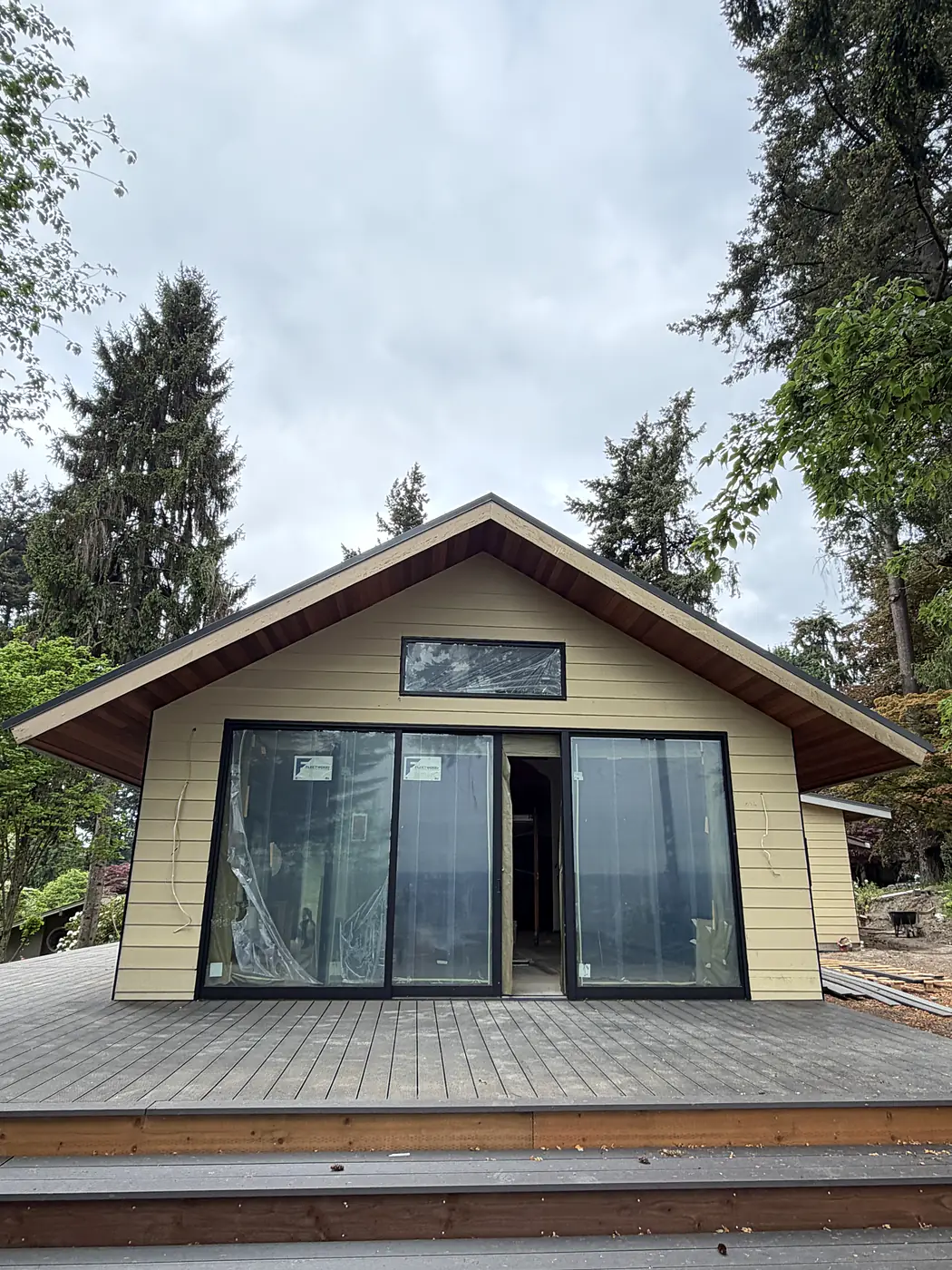
Photos of finished decks.
FAQ
Deck questions
Still have a question?
Send it with the quote form, or call. We answer every request ourselves.
Can you put new boards on my old deck?
Sometimes. When the frame, the footings and the ledger are sound, new boards and a new railing can go on the old frame. We check them first.
Composite or wood?
Wood costs less to build. Composite and PVC cost more but save years of staining and sealing. The quote can price both.
How long does a deck take?
One to three weeks on site for most decks, plus the time the city takes with a permit where one is needed.
Do I need a permit?
In Seattle, for a deck more than 18 inches above the ground or on a roof. Other cities set their own rules; we check them for your address.
When does a deck need a railing?
When it stands more than 30 inches above the ground: a guardrail at least 36 inches tall, with no opening a 4 inch ball could pass through.
What happens to the old deck?
It is taken down and hauled away, unless its frame is sound enough to keep.
Are you licensed and insured?
Licensed in Washington: [LICENSE NO.]. Insurance: [WHAT IS CARRIED, AND THE BOND].
Ready for a new deck?
Send the size you have in mind and a photo of the spot.